All Shirts
 New Arrivals
 Luxe Collection
 Combo Packs
 Accessories
 Bulk Order
 Giza Cotton
 Pure Linen
 Cotton Linen
 Oxford
 Corduroy
 Wrinkle Free
 2 Ply Cotton
 Fabrics We Use
 Full Sleeve
 Half Sleeve
 French Cuff
 Plus Size
 Shop By Pants
 Work Essentials
 Client Meetings
 Presentations
 Smart Casual Fridays
 Travel & Long Days
 Weddings & Special Occasions
 Interviews
 Build Your Giza Pack
 Build Your Linen Pack
 Size & Fit Guidance
 Contact Us
 About Us
 Our Offline Store
 Men Of TFC
 Buy Back TFC
Lightweight Summer Shirts vs Regular Shirts: What’s the Difference?
Key Takeaways
- Lightweight summer shirts are made from breathable fabrics like linen, cotton voile, chambray, and cotton-linen blends to keep you cool in hot weather.
- They typically range from 90–140 GSM, offering better airflow, faster drying, and improved moisture management.
- Regular shirts use heavier fabrics (150–200+ GSM) that provide more structure, durability, and year-round versatility.
- Summer shirts feature looser weaves and relaxed fits, enhancing ventilation and reducing heat retention.
- Regular shirts have tighter weaves and structured cuts, making them ideal for formal settings and cooler temperatures.
- Lightweight shirts may wrinkle more easily and can be slightly sheer, while regular shirts offer better opacity and shape retention.
- For hot and humid climates, lightweight summer shirts provide superior comfort, breathability, and ease of movement.
- Regular shirts remain a practical choice for air-conditioned offices, formal occasions, and multi-season wear.
- Choosing the right shirt depends on the weather, occasion, and desired level of comfort.
- Investing in quality lightweight summer shirts helps maintain a polished appearance while staying comfortable throughout the summer season.
Introduction
Choosing the right clothing is important for comfort and style, especially in the summer. One of the common questions men ask is whether they should wear regular shirts or lightweight summer shirts. Lightweight summer shirts (90–120 GSM) are crafted with breathable fabrics like linen or thin cotton, and enhance airflow and moisture evaporation.
Regular shirts use heavier, denser weaves suited for structure or colder weather, and easily trap sweat in high temperatures. Both shirts appear the same, but differ in terms of the fabric, construction, breathability, comfort, and overall performance in hot conditions.
You must understand the difference between both to make a better choice for you. In this blog, we look at the difference between the lightweight shirts and regular shirts and help you find the suitable option for the warm months.


What Are Lightweight Summer Shirts?
Lightweight summer shirts are a suitable choice for hot and humid weather and keep you cool. It is because it is crafted with breathable fabrics and construction techniques that improve airflow and manage moisture. It focuses on reducing heat retention and making you look stylish.
Whether you are going on casual outings, vacations, outdoor events, or office meetings, lightweight shirts are suitable for you and keep your comfort at focus. The popular fabrics in these shirts are
- Cotton voile
- Linen shirts
- Cotton-linen blends
- Chambray
- Seersucker
- Lightweight rayon
- Bamboo fabric shirts
What Are Regular Shirts?
Regular shirts are made year-round, not only for hot weather. It is made with medium-weight fabrics that offer durability, versatility, and structure. The popular fabrics used in these shirts are
- Standard cotton
- Oxford cloth
- Twill
- Poplin
- Polyester blends
- Denim
- Flannel (for cooler seasons)

Difference between Lightweight Summer Shirts and Regular Shirts
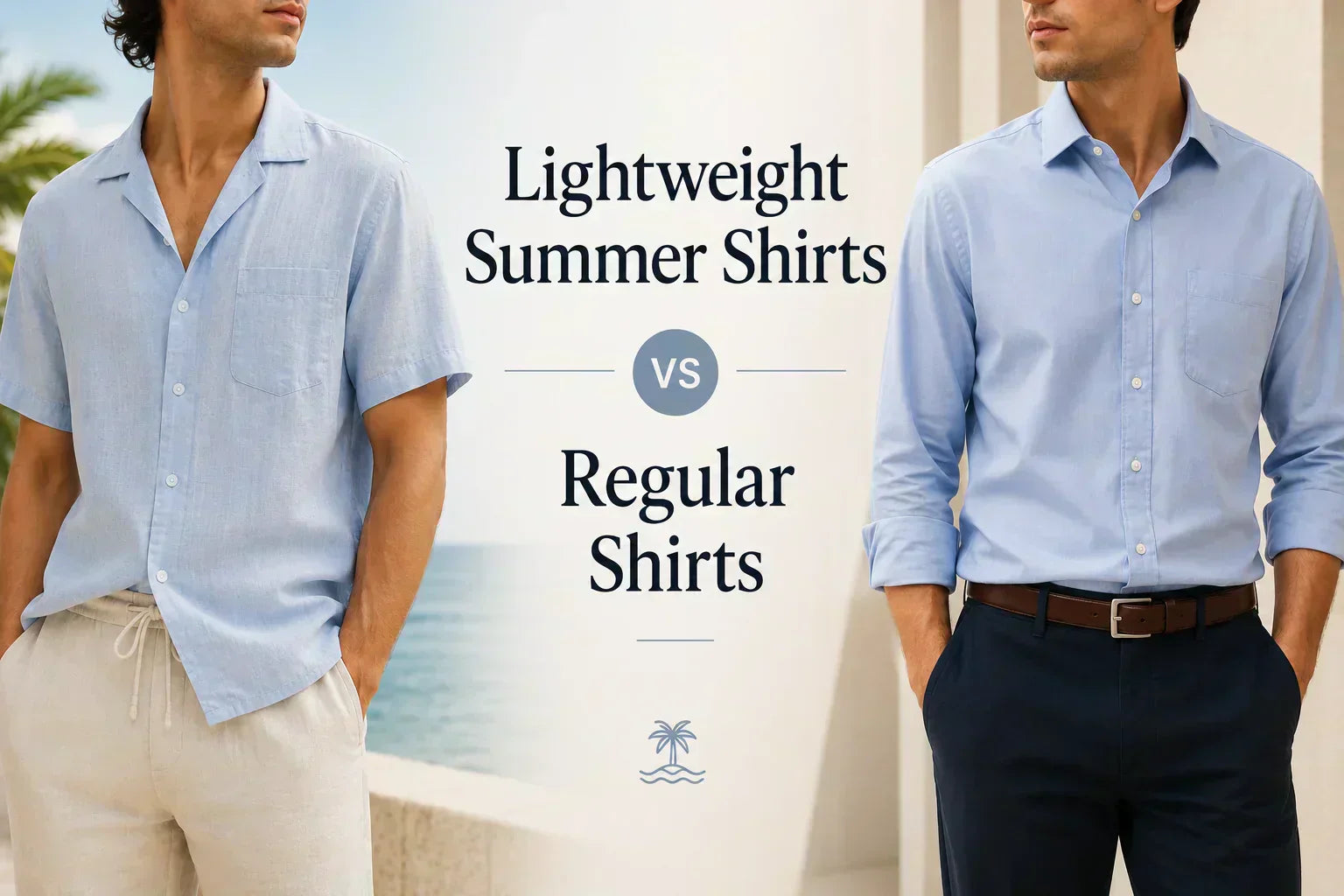
Lightweight summer shirts and regular shirts are different in terms of breathability, weave count, and fabric weight. Summer shirts are made to keep you cool in the heat, using thin, airy materials with a low weight. Regular shirts prioritize structure, durability, and versatility for different seasons. Here's a breakdown of the differences
1. Fabric Weight & Breathability
Lightweight Summer Shirts
These shirts weigh between 90 and 140 GSM (grams per square metre). It is made with breathable, moisture-wicking materials like linen, cotton, etc., and allows quick drying and maximum airflow.
Regular Shirts
Regular shirts weigh between 150 and 200+ GSM. It features denser, more tightly woven fabrics (like heavy Oxford or twill) that trap more body heat and block the wind. It makes it suitable for cooler temperatures, but can feel stifling in warm weather.
2. Weave and Texture
Lightweight Summer Shirts
Lightweight shirts have open and looser weaves. It keeps the fabric from lying flat against your skin, promoting continuous air circulation.
Regular Shirts
The regular shirts feature the more uniform and tighter waves. This structure gives a crisp, clean, and wrinkle-resistant look but limits airflow through the fibers.
3. Fit and Structure
Lightweight Summer Shirts
Lightweight summer shirts cut with a slightly looser or relaxed fit. It avoids fabric clinging to your body when sweating and encourages natural ventilation.
Regular Shirts
These formal shirts are available in the structured cuts (like slim or traditional tailored fits). Its heavier weight helps you to maintain the defined silhouette and easily pair with blazers or jackets.
4. Opacity & Sun Protection
Lightweight Summer Shirts
The thinness of lightweight shirts leads to semi-transparency. Even if it is breathable, you still need the undershirt if the fabric is too sheer.
Regular Shirts
Regular shirts are opaque and give good coverage. Its long sleeve shirts are more suitable for sun protection because they can block UV rays without the weight of heavy fabrics.
Key Differences: Lightweight Summer Shirts vs Regular Shirts
Here are the key differences between the regular and lightweight summer shirts
|
Feature |
Lightweight Summer Shirts |
Regular Shirts |
|
Fabric Weight (GSM) |
80–150 GSM: Very thin, enables maximum airflow. |
160–200+ GSM: Thicker, offering structure and opacity. |
|
Common Materials |
Linen, Seersucker, Chambray, Cotton Voile, Tencel |
Oxford cloth, cotton blends, flannel, and heavy twill. |
|
Breathability |
High breathability. Promotes airflow and dries sweat quickly, and avoids overheating. |
Moderate to Low breathability. Holds more heat for insulation in cooler weather. |
|
Structure & Feel |
Loose and flowy. Prone to wrinkling (especially linen) but feels soft against the skin. |
Stiff and crisp. Holds a sharp shape for layering or professional settings |
Which Shirt Is Better for Summer?
Lightweight shirts are best for summer and stand out in the hot and humid conditions. It provides the
- Better breathability
- Improved moisture management
- Greater comfort
- Reduced heat retention
- Easier movement
Compared to regular shirts, they are still suitable for work if you wear them indoors in cool environments. Lightweight shirts can be worn in warmer months, whereas regular shirts offer versatility for the rest of the year.
if you are looking for quality summer shirts to buy? Then you can check the Formal Club collection. We offer you shirts in lightweight fabrics, breathable designs, and modern fits, and ensure all-day comfort. Whether you need the smart office wear or casual summer essentials, our shirts offer you better quality, style, and functionality for all occasions.


Conclusion
Lightweight summer shirts are made with breathable fabrics, lighter construction, and better moisture management. Regular shirts are suitable for formal occasions and year-round versatility.
But when the temperature rises, then the lightweight summer shirts are the best choice. Lightweight shirts are made for warm-weather comfort by using breathable fabrics, lighter construction, and better moisture management.
You should invest in good summer shirts to enhance comfort and maintain your polished and stylish look throughout the season.
Also Read: Is Linen Good for Summer Travel? Pros, Cons & When to Choose It (2026 Guide)
FAQs
Q1. Can Long-sleeve Shirts Be Considered "Lightweight"?
Ans: Yes, the long-sleeve shirts are also considered lightweight and are made with cotton or linen. It gives excellent gun protection without causing you to sweat, and you can easily roll up sleeves for versatile styling.
Q2. What Are the Best Fabrics for Summer Shirts?
Ans: The best fabrics for the summer shirts are cotton, linen, and lyocell. These natural materials provide breathability, air circulation, and escape body heat and keep you cool on hot days.
Q3. Can I Wear Lightweight Summer Shirts to the Office?
Ans: Yes, you can wear the lightweight summer shirts to the office, but in the right fabric. Lightweight fine cotton fabric is suitable for office wear because it makes you look sharp and professional. Avoid buying pure linen or wrinkled fabric to follow strict formal dress codes.
Q4. Do Summer Shirts Wrinkle More Easily Than Regular Shirts?
Ans: Yes, summer shirts wrinkle more easily than regular shirts, because they are constructed of 100% linen and lightweight cotton. This fabric wrinkles easily due to a lack of heavy structural fibers and synthetic coatings.
Q5. How Should I Wash Lightweight Shirts to Prevent Damage?
Ans: You should wash lightweight shirts in cold water on a gentle cycle. Use the mesh laundry bag to wash ultra-thin fabrics and prevent tearing. Hang it to air dry, because high heat in the dryer can shrink fine yarns and ruin the fabric.