All Shirts
 New Arrivals
 Luxe Collection
 Combo Packs
 Accessories
 Bulk Order
 Giza Cotton
 Pure Linen
 Cotton Linen
 Oxford
 Corduroy
 Wrinkle Free
 2 Ply Cotton
 Fabrics We Use
 Full Sleeve
 Half Sleeve
 French Cuff
 Plus Size
 Shop By Pants
 Work Essentials
 Client Meetings
 Presentations
 Smart Casual Fridays
 Travel & Long Days
 Weddings & Special Occasions
 Interviews
 Build Your Giza Pack
 Build Your Linen Pack
 Size & Fit Guidance
 Contact Us
 About Us
 Our Offline Store
 Men Of TFC
 Buy Back TFC
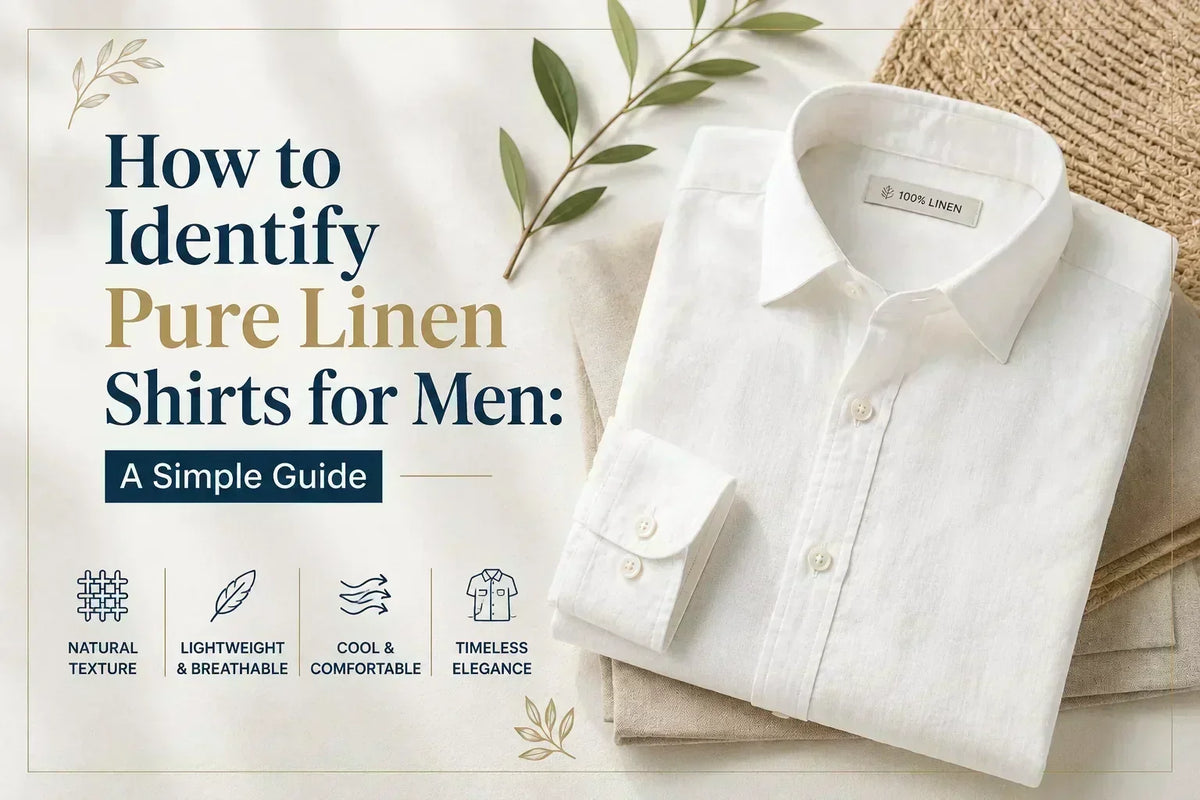
How to Identify Pure Linen Shirts: A Simple Guide
Key Takeaway
- Check the fabric label for “100% linen” or “100% flax linen.”
- Look for a natural texture and visible weave with subtle irregularities.
- Pure linen generally feels cool, dry, and slightly crisp.
- Expect linen to wrinkle naturally and develop visible creases.
- Consider the fabric weight based on the climate and intended use.
- Check for neat stitching, secure buttons, and clean finishing.
- Remember that slubs, wrinkles, or texture alone cannot confirm purity.
- The fiber composition label is the most reliable way to confirm a pure linen shirt.
Introduction
A linen shirt is a smart addition to a man's wardrobe, especially in summer. Every shirt labeled as linen is made with 100% linen, so you should identify it properly before buying. If you are asking what pure linen is and how it is different from a linen blend, then its key difference lies in the fiber composition. Some shirts contain blended linen with cotton, polyester, or viscose.
So if you want to buy 100% pure linen shirts, then you should identify them properly. You should check the fabric label, examine the weight, texture, wrinkles, and stitching to assess whether the shirt is made with pure linen or not. This guide gives you the 8 best ways to learn how to identify pure linen shirts.
Quick Checklist for Pure Linen Shirts
Here is the quick checklist you can follow to identify pure linen shirts
|
Test |
What to Look For |
|
Label |
“100% linen” or “100% flax linen” |
|
Texture |
Natural texture with subtle irregularities |
|
Weave |
Visible, well-defined weave |
|
Finish |
Natural, generally matte appearance |
|
Feel |
Cool, dry, and slightly crisp |
|
Wrinkles |
Naturally develops visible creases |
|
Weight |
Appropriate for the intended use and climate |
|
Construction |
Clean seams and neatly finished edges |
|
Softening |
Becomes softer with use and washing |
Key Methods for Identifying Pure Linen
Checking the fabric label and examining the texture, weight, weave, and behavior of shirts helps you identify whether it is made with pure linen or not. Here is how to identify pure linen by following eight methods given below
1. Check the Label on the Fabric
The easiest and simple method to identify 100% linen shirts is by examining the composition label inside the shirt and looking out for "100% linen" or "100% flax linen".
When you come across descriptions like "linen blend", "linen look" or "linen feel", or labels which do not state the fiber percentages, be careful because such terms might mean that the shirt contains cotton, viscose, polyester or other fibers rather than being made completely of linen.
While buying something online, it's better to look at the detailed fabric composition rather than depending only on the product title.
Explore premium formal shirts designed for comfort, confidence and a sharp professional look.Build Your Professional Wardrobe
2. Look at the Visual Weave
Pure linen has a naturally textured look because the flax fibers can differ slightly in thickness. If you examine the fabric carefully, you will see small, irregular variations called slubs. It is these minor irregularities that contribute to the different natural texture of linen.
A surface that is even and smooth is the sign of highly processed fabric or a synthetic mix, even though some modern linen can also have a fairly smooth finish. You might also place the shirt against a light. In the case of a good-quality linen fabric, the weave should be clearly visible together with slight variations in the yarn rather than having an excessively even look.
Pure Linen Shirts For Men
View All →


3. Feel the Fabric
When you first touch pure linen, it usually feels cool, dry, and somewhat crisp. This is why it is comfortable in warm weather.
At first, new linen may seem a bit firm or structured, but it gets softer as it is used and washed. One of the reasons linen is so appealing is because of this slow softening. If you want to understand what pure linen is from a physical perspective, then you should feel the fabric. Touch the fabric and see if it feels cool and crisp on your skin before buying.
Our Collection is designed to help you look sharp, feel confident and stay comfortable all day.Avoid These Mistakes With the Right Formal Shirt
4. Look for a Natural Matte Finish
Pure linen usually has a soft, natural or slightly matte look rather than a quite synthetic shine. Check the shirt under good lighting. Look at its subtle texture and natural surface instead of an excessively glossy finish. If the shirt has a strong artificial sheen, then you should check the fiber composition more carefully. Note that the dyes, finishes, and fabric construction of shirts may affect their appearance, so you can consider this test as an additional indicator along with label check.
5. Apply the Wrinkle Test
Linen has a tendency to crease; it means it can form wrinkles easily. So take the linen shirts in your hand and gently press them. If you see visible creases after pressing, it means it is 100% pure linen.
A fabric that becomes completely smooth may consist of wrinkle-resistant fibers or blends. But this is not a definite test of purity because linen can be treated to reduce wrinkling.
The tendency for linen to crease is not a problem, but it contributes to the relaxed look of your linen garments.
6. Check the Weight of Fabric
Linen shirts come in various weights as per their use and method of construction. Lightweight linen is especially common in summer shirts because it offers good airflow and comfort. If you are buying linen shirts, then a weight between 150 and 200 g/m² is a good choice, because it provides a balance between breathability, coverage, and durability.
There is no universal weight range that indicates 100% linen material. A thin or flimsy fabric is not always more synthetic than heavier fabrics. So you should only consider the fabric weight with fiber composition, weave, and overall construction to identify pure linen shirts.
7. Examine the Stitching and Finishing
After checking the fabric, you should look at the stitching and finishing of shirts. Shirts of good quality will have neat and even seams, secured buttons, and well-finished edges. Also look for uneven stitching, excessive loose threads, or poorly finished hems. These problems indicate poor construction of shirts. A good linen shirt should have genuine linen fabric together with careful tailoring and finishing.
8. Do Not Judge Purity on Stiffness Alone
A newly purchased linen shirt may seem a bit crisp or stiff at first. But it does not always indicate that the quality is poor or that it contains synthetic materials.
Linen usually gets softer due to frequent use and washing. A shirt that becomes more comfortable and supple as it wears can keep its natural qualities of linen and acquire a softer texture. Hence, the initial stiffness should not be used as a single indicator to determine whether a fabric is pure linen.
Discover premium formal shirts made for modern professionals.Ready to Upgrade Your Professional Wardrobe?

Pure Linen vs. Cotton-Linen Blends
This difference table between pure linen and cotton linen blend helps you to identify the pure linen by its characteristics and make an informed purchase.
|
Feature |
100% Pure Linen Shirt |
Cotton-Linen Blend Shirt (e.g., 60/40) |
|
Breathability |
Maximum airflow, suitable for intense heat. |
Moderate cooling, slightly heavier feel. |
|
Wrinkle Resistance |
Low; creases easily and sharply. |
Moderate; holds its shape longer through the day. |
|
Initial Texture |
Firm, crisp, and heavily textured. |
Softer and smoother straight off the rack. |
|
Best Used For |
Beach vacations, casual wear, and humid days. |
Smart-casual office wear and everyday business settings. |
Shop Comfortable Linen Formal Shirts for Men at The Formal Club
The Formal Club helps the men to choose the pure linen formal shirts. If you appreciate the breathability and natural feel of linen, then our shirts are best for you. It provides you with a refined option for work, meetings, and special occasions. As a polyester-free formal brand, we focus on quality and comfortable fabrics, smart fits, and timeless designs.
Browse our linen shirts for men that combine everyday comfort with a polished appearance, and make your look confident.
Conclusion
Men can easily identify the 100% linen shirts by following the above fabric-testing methods. You should look at the fiber-composition label and the shirt's texture, drape, weave, feel, and wrinkle-resistant properties.
Keep in mind that the physical properties can vary according to the weight, weave and finish of the linen. A shirt with a professional appearance might still be made from a linen blend, and a pure 100% linen shirt could have a softer or smoother finish than you would expect.
To ensure a quality purchase, you should check labels if they mention 100% linen and buy from a trusted brand like The Formal Club. Learning how to identify pure linen by checking labels, fabric construction, texture, weave, weight, etc, helps you make a smart and worthy choice.
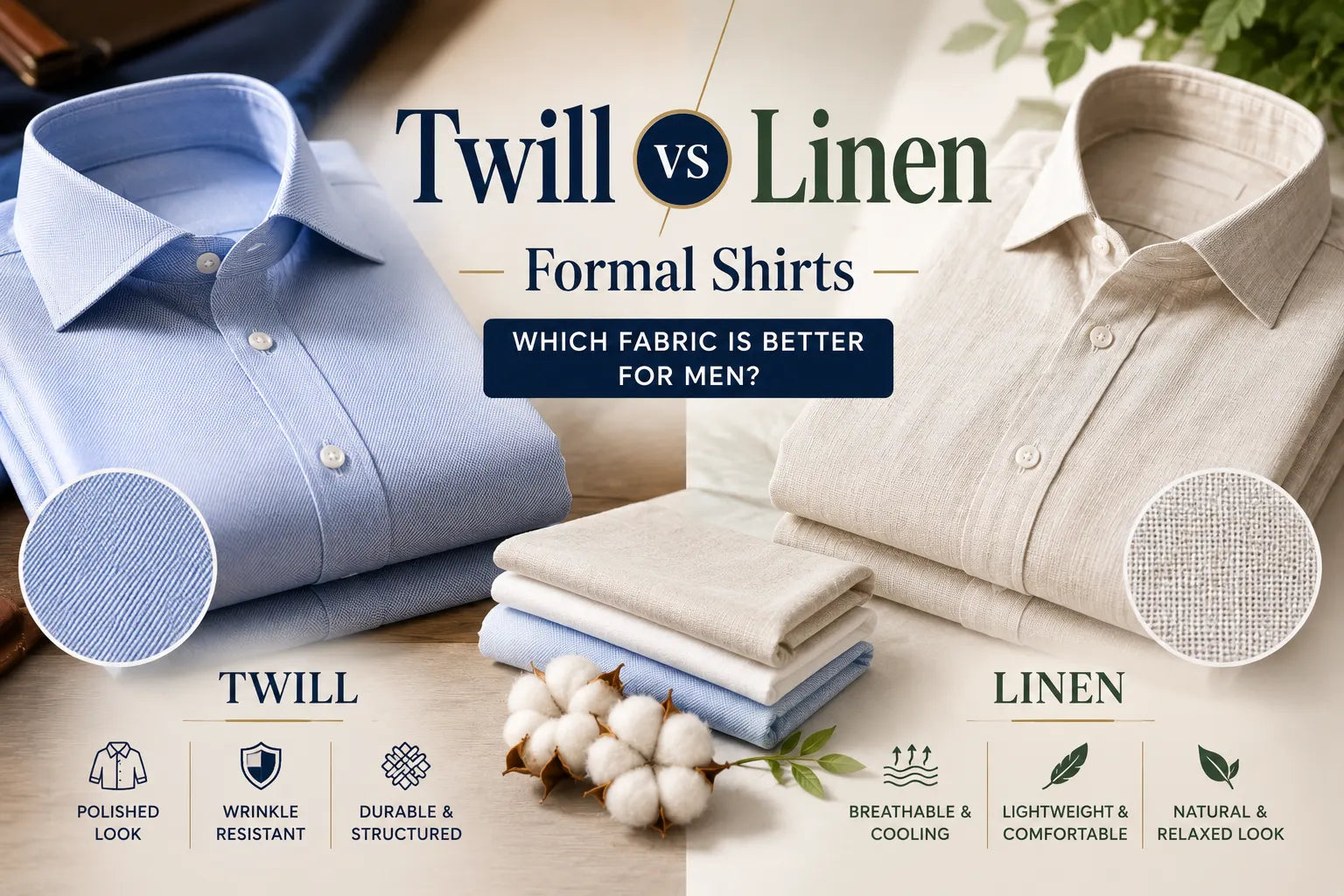
Also Read: Twill vs Linen Formal Shirts: Which Fabric Is Better for Men?
FAQs
Q1. How to Tell Whether a Fabric is 100% Linen?
Ans: To determine whether a fabric is 100% linen, start by checking the care label. If you want to perform physical tests, then you should perform the crumple test (pure linen tends to wrinkle deeply and retains sharp, knife-like creases). You can also feel the texture to see if it is cool and slightly crisp, look for small natural slubs in the weave, or do a definitive burn test.
Q2. Does Pure Linen Easily Wrinkle?
Ans: Yes, pure linen can wrinkle easily and show creases when worn. It is a normal feature of linen shirts and maintains your relaxed natural look.
Q3. What Does Pure Linen Feel Like?
Ans: Pure linen feels cool, crisp, and smooth at first. It can seem a bit rough, but it softens with each wash. Linen is breathable and light, keeping you comfortable in warm weather. It has a slightly textured surface, which gives it a natural, relaxed feel.
Q4. Do Linen Slubs Signify Pure Linen Fabric?
Ans: Natural slubs, which are small irregularities in the yarn, are a feature of linen; but the presence of slubs alone is not enough to indicate that a shirt is 100% linen.
Q5. Is Pure Linen Better Than a Linen Blend?
Ans: Pure linen is highly breathable and has a distinct natural texture, whereas linen blends can offer greater softness, more resistance to wrinkling, or easier care. The better option will depend on your personal preferences and requirements.