All Shirts
 New Arrivals
 Luxe Collection
 Combo Packs
 Accessories
 Bulk Order
 Giza Cotton
 Pure Linen
 Cotton Linen
 Oxford
 Corduroy
 Wrinkle Free
 2 Ply Cotton
 Fabrics We Use
 Full Sleeve
 Half Sleeve
 French Cuff
 Plus Size
 Shop By Pants
 Work Essentials
 Client Meetings
 Presentations
 Smart Casual Fridays
 Travel & Long Days
 Weddings & Special Occasions
 Interviews
 Build Your Giza Pack
 Build Your Linen Pack
 Size & Fit Guidance
 Contact Us
 About Us
 Our Offline Store
 Men Of TFC
 Buy Back TFC
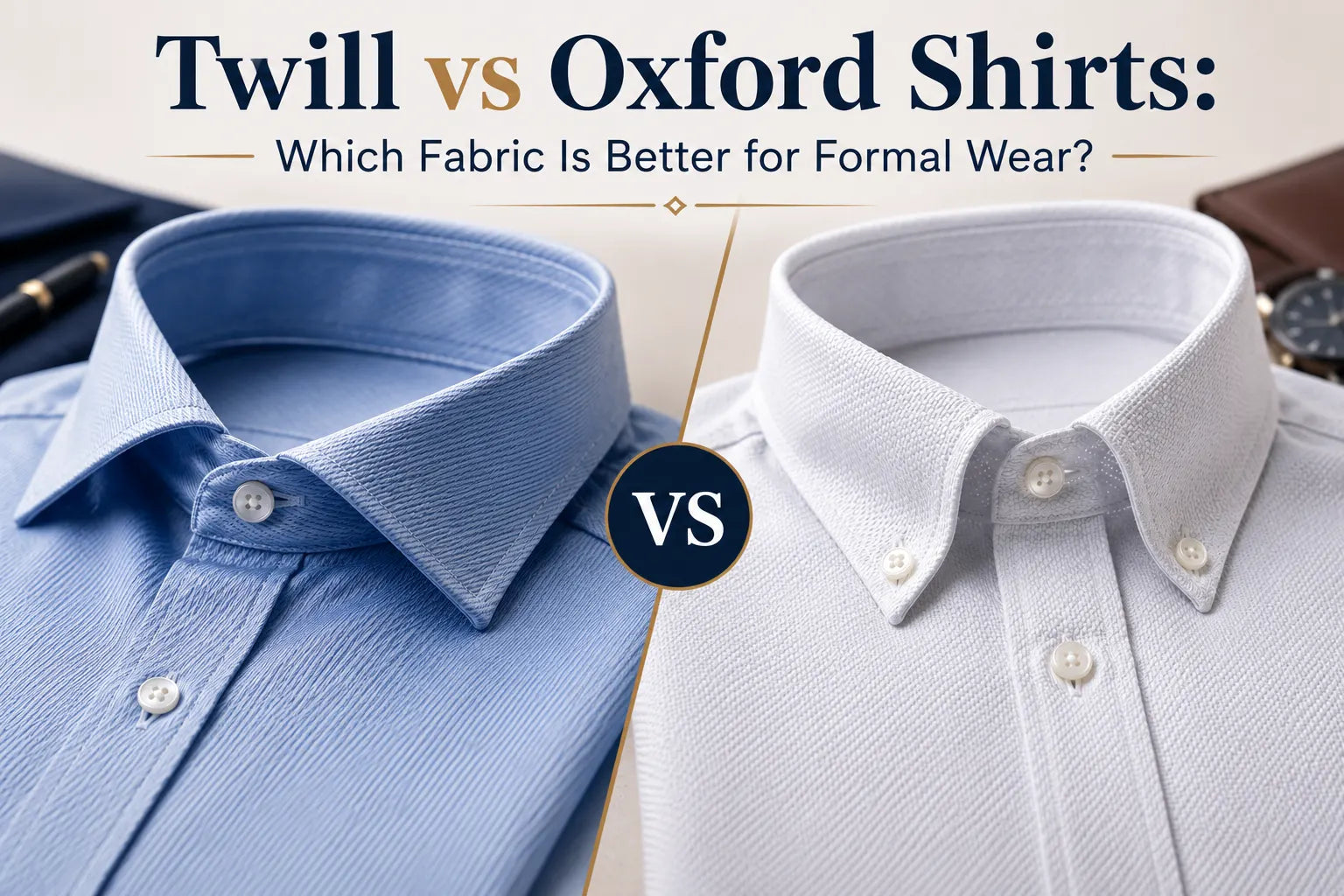
Twill vs Oxford Shirts: Which Fabric Is Better for Formal Wear?
Key Takeaways
- Twill shirts have a smooth finish, subtle sheen, and polished appearance, making them ideal for formal office wear shirts and business meetings.
- Oxford shirts feature a textured basket weave with superior breathability, making them perfect for business-casual and everyday office outfits.
- Twill fabric offers better wrinkle resistance and drapes more elegantly, helping you maintain a sharp look throughout the day.
- Oxford fabric is highly durable, comfortable, and becomes softer with regular wear and washing.
- Choose twill for formal events, client meetings, and professional occasions where a refined appearance matters most.
- Choose Oxford for daily office wear, smart-casual styling, and warmer weather thanks to its breathable construction.
- A versatile wardrobe includes both fabrics, allowing you to dress appropriately for both formal and relaxed professional settings.
Introduction
Choosing the right fabric between twill and Oxford is important for men. Even many people focus on style, but the right fabric determines how a shirt looks, performs, and feels during the day.
The two popular fabric options in men's formal shirts are twill and Oxford fabrics. Both fabrics are woven with cotton and provide excellent durability, but differ in texture, appearance, formality, and breathability.
Whether you are shopping for office attire, building a professional wardrobe, or looking for shirts for special occasions, you must understand the twill vs oxford to make a smart choice.
In this blog, we tell you the differences between Oxford and twill shirts, and compare each aspect from weave patterns and comfort to wrinkle resistance, and help you make the right decision for formal wear.
What Is a Twill Shirt?
A twill shirt uses a diagonal weaving pattern and creates the distinct diagonal lines on the fabric's surface. This fabric has a soft sheen and smoother texture, giving it a more elegant look. Twill is a popular choice for high-quality dress shirts because it drapes well and feels very soft. Its characteristics are
- Smooth finish
- Softer hand feel
- Diagonal weave pattern
- Luxurious appearance
- Better wrinkle resistance
- Suitable formal look


What Is an Oxford Shirt?
An Oxford shirt is made with a basket-weave design where multiple yarns are woven together to create a comfortable yet durable fabric. This weaving gives Oxford shirts a slightly textured appearance with a matte finish, and they become comfortable while still looking elegant. Its characteristics are
- Slightly textured surface
- Soft and comfortable
- Medium-weight fabric
- Matte appearance
- Ideal for casual and business casual style
- Excellent durability
Detailed Comparison of Oxford vs. Twill Shirts
Deciding between the twill vs oxford fabric for formal wear is more than personal preferences. Each fabric has its strengths regarding appearance, comfort, breathability, maintenance, and durability. You must learn the differences between them to choose the right shirt for work, formal events, or everyday wear. Here is a detailed comparison of the key characteristics of both twill and Oxford fabrics.
1. Appearance
If you want to choose the right fabric for formal shirts, then appearance is the major factor of comparison. The shirt's appearance significantly impacts how formal it looks. Twill fabric has a smooth surface with a subtle sheen that gives it a polished finish. Its diagonal weave is understated, making it a great fit for tailored suits, ties, and formal business attire.
Oxford fabric features a basket weave, creating a more noticeable texture. While premium Oxford shirts work well in offices, their textured look is somewhat more casual than twill shirts.
The elegant drape and smooth finish of twill shirts make them suitable for formal wear. They create a sharper, more sophisticated appearance that fits your professional and formal settings.
2. Comfort and Feel
Comfort is another key factor of twill shirt vs oxford comparison. Comfort level relies on the weaving method and the quality of the 100% Cotton Shirts yarn. Twill shirts feel soft right from the start because the diagonal weave offers a smoother surface with fewer exposed fibers. They also drape naturally without stiffness, making them comfortable for long hours at work.
On the other hand, Oxford shirts have a slightly thicker, more structured feel. They soften with repeated washing but usually remain thicker compared to twill.
3. Breathability
You should compare the breathability of twill and Oxford shirts to choose the right option for formal wear. Twill fabric is also breathable, but its tighter weave holds a bit more warmth, making it better for air-conditioned spaces and cooler weather.
Oxford fabric has a more open basket weave that allows better airflow, keeping you cool and comfortable during long office hours. So if you are looking for formal shirts for summer, then Oxford fabric is the best choice. Its open weave offers superior comfort and air circulation in warmer conditions.
4. Wrinkle Resistance
A shirt that stays crisp all day needs less care and looks more professional. Twill fabric resists wrinkles naturally because of its diagonal weave and reduces crease formation. This means the shirt retains a clean, polished look even after hours of wear. In contrast, Oxford shirts wrinkle more readily due to their basket weave and thicker yarn construction, which may require more frequent ironing.
As a twill shirt vs Oxford comparison on wrinkle resistance, twill shirts are better for formal wear. It keeps your look neat and requires less effort to maintain a freshly pressed appearance.


5. Durability
Both twill and Oxford fabrics are built to last, but they achieve durability differently. Oxford fabric is known for its strong basket weave and thicker yarns, making it very resistant to daily wear and frequent washing. Twill is also durable but offers a softer feel and a more refined finish. It maintains softness over time. With proper care, both fabrics can last for years.
6. Drape and Fit
Drape and fit are other factors of comparison between twill and Oxford shirts. Draping affects how a shirt fits and flatters your body shape. Twill fabric flows naturally, creating clean lines and a streamlined look that works well in slim-fit and tailored shirts.
On the other hand, Oxford fabric is slightly stiffer, providing more structure and a relaxed appearance. If you want a sleek shirt that sits neatly under a blazer or suit jacket, twill fabric usually offers a better fit and presentation.
7. Weave and Texture
The main difference between twill and Oxford shirts is in how the fabric is woven. Oxford fabric uses a basketweave pattern made with thicker yarns. This creates a more visible texture and a slightly rougher surface.
This textured finish gives Oxford shirts a casual, sturdy feel. Twill fabric uses a diagonal rib weave, where the threads form fine parallel lines across the fabric. This method creates a smoother, softer texture with a subtle shine, making twill shirts look more polished and formal.
Oxford vs. Twill Shirts: Key Differences at a Glance
Here are the key differences between twill vs oxford shirts
|
Feature |
Twill |
Oxford |
|
Weave Pattern |
Diagonal lines (creates a smooth, polished surface) |
Basketweave (thicker, slightly rougher, distinct texture) |
|
Formality |
Medium to High (suitable for business and formal suits) |
Low to Medium (ideal for smart-casual and relaxed wear) |
|
Weight & Feel |
Drapes well, relatively heavier but soft and sturdy |
Thick, highly durable, and very breathable |
|
Wrinkle Resistance |
High (naturally resists wrinkles, easy to iron) |
Low (prone to soft wrinkling, but suits the casual aesthetic) |
|
Best Pairings |
Worsted wool suits, formal trousers, silk ties |
Chinos, jeans, tweed jackets, unstructured blazers |
Why Twill Wins for Formal Wear
Here are the qualities that make twill fabric best for formal wear
- Crisp Appearance: Twill resists wrinkles better than regular fabrics. It holds a sharp crease throughout the day. This feature makes it best for formal wear.
- Deep Color Saturation: The diagonal weave reflects light in a way that makes colors, especially bright white and deep blue, look vibrant.
- Excellent Drape: It is a heavier fabric and falls smoothly against the body, and complements your suit jacket and tie perfectly.
When to Choose Oxford Instead
Here are the situations when you can choose Oxford fabric over twill fabric
- Casual Fridays: You can easily style the Oxford shirts with jeans, chinos, or casual blazers.
- Warm Weather: Standard Oxford is breathable, though Royal Oxford can bridge the gap into semi-formal wear.
- Low Maintenance: Because it is a durable fabric and softens with time on every wash, it requires less care and maintenance. This is one of the reasons why some people choose Oxford fabrics for their formal shirts.

Elevate Your Formal Wardrobe with The Formal Club
The Formal Club is committed to offering premium formal shirts to men with quality fabric and craftsmanship. Our collection features meticulously crafted shirts made from high-quality materials, providing a perfect balance of comfort, durability, and timeless style.
Whether you like the smooth elegance of twill or the versatile appeal of Oxford, every shirt is designed for a sharp fit and all-day comfort. Explore The Formal Club's formal shirt collection to find the perfect piece for work, business meetings, and special events.
Conclusion
When comparing twill shirts vs Oxford, there is no single best choice. It depends on your wardrobe needs and the occasions you style for. Twill is a better option for formal wear than oxford fabric.
It offers a richer texture, sharper look, and a more structured drape and aligns with your business formal or black-tie attire. While Oxford fabric is highly durable, its traditional basketweave is more casual, and makes it ideal for business-casual or smart-casual settings.
A suitable wardrobe includes both fabrics, twill for polished formal occasions and Oxford for relaxed professional wear. This combination prepares you for any dress code while enjoying the unique benefits of each fabric.
Also Read: Bamboo Fabric vs Cotton: Which Fabric Is Better for Men's Shirts?
FAQs
Q1. What’s The Difference Between Twill And Oxford?
Ans: Oxford and twill are both fabric weaves. Twill fabric is well known for diagonal ridges, and Oxford fabric is well known for a basket-like texture. Twill is often used for heavier fabrics like denim, while Oxford is frequently used for dress shirts.
Q2. Which Fabric is More Durable: Twill or Oxford?
Ans: Twill fabric is typically more durable than Oxford because of its diagonal weave, which provides additional strength and resistance to wear. Oxford has a basket-weave pattern that feels softer but isn't quite as robust as twill. For long-lasting shirts, twill is often the better choice.
Q3. Are Oxford Shirts Appropriate for Business Events?
Ans: Yes, it is suitable for business casual situations, especially when paired with chinos or dress pants.
Q4. Is Twill Fabric Suitable for Formal Wear?
Ans: Yes, it is suitable for formal wear because of its diagonal weave. It creates a sophisticated look for formal settings. Its durability and wrinkle resistance also enhance your overall appearance, ensuring you look sharp at any event.
Q5. How to Style Twill Shirts for Formal Events?
Ans: You can style the twill shirts for formal events by choosing sharp fit, neutral colors, and refined tailoring. You can style the light blue or solid white shirts with a classic silk tie, a tailored suit, and polished leather shoes.