All Shirts
 New Arrivals
 Luxe Collection
 Combo Packs
 Accessories
 Bulk Order
 Giza Cotton
 Pure Linen
 Cotton Linen
 Oxford
 Corduroy
 Wrinkle Free
 2 Ply Cotton
 Fabrics We Use
 Full Sleeve
 Half Sleeve
 French Cuff
 Plus Size
 Shop By Pants
 Work Essentials
 Client Meetings
 Presentations
 Smart Casual Fridays
 Travel & Long Days
 Weddings & Special Occasions
 Interviews
 Build Your Giza Pack
 Build Your Linen Pack
 Size & Fit Guidance
 Contact Us
 About Us
 Our Offline Store
 Men Of TFC
 Buy Back TFC
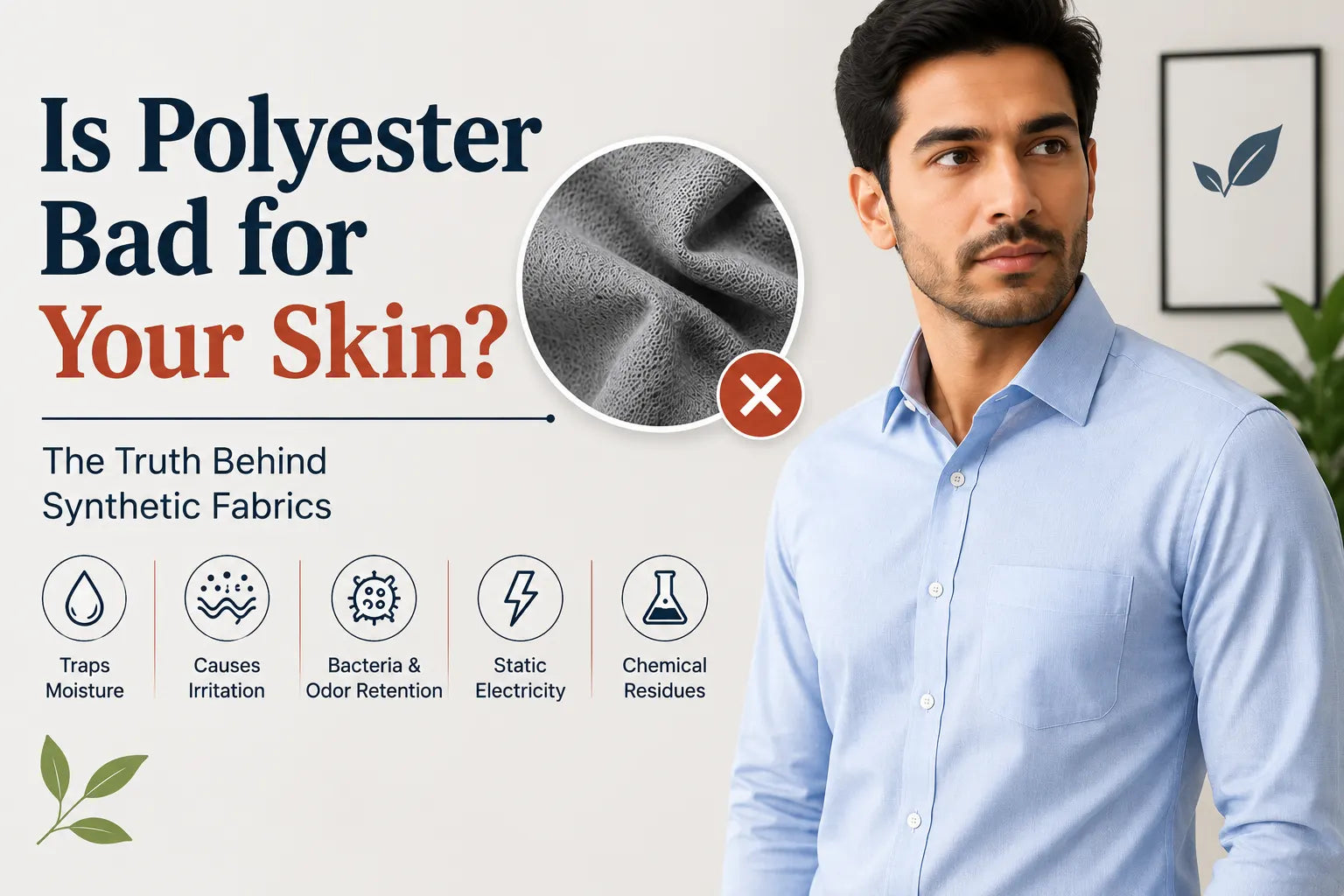
Is Polyester Bad for Your Skin? The Truth Behind Synthetic Fabrics
Key Takeaways
- Polyester can trap heat and moisture, causing discomfort for some people.
- People with sensitive skin, eczema, or allergies may experience itching, redness, or irritation when wearing polyester fabrics.
- Polyester tends to retain sweat and odor, which can encourage bacterial growth and increase skin discomfort during prolonged wear.
- Chemical finishes and dyes may trigger allergic reactions, especially in sensitive individuals.
- Some people with eczema report greater irritation when wearing synthetic fabrics. and sensitive skin.
- Natural fabrics such as cotton, linen, bamboo, and merino wool are generally more breathable and skin-friendly alternatives.
- The best fabric choice depends on your skin type, climate, and daily activities, making comfort and breathability key factors to consider.
Introduction
Polyester is a synthetic fabric made from petroleum-based materials. While durable and affordable, it may be less comfortable for the skin and has a greater environmental impact than many natural fabrics.
Even though it is inexpensive, it traps heat, retains sweat, and limits airflow. It makes it uncomfortable for everyday wear. In individuals with sensitive skin, eczema, or allergies, this trapping of moisture may contribute to itching, redness, or irritation in susceptible individuals.
As awareness of breathable and skin-friendly fabrics continues to grow, consumers often ask is Polyester really bad for your skin? It is not good for your skin because it can cause irritation, rashes, and other skin problems. Because it is made from petroleum-based synthetic fibers, it is also bad for the environment throughout its lifecycle and impacts your comfort and skin health.
Chemical dyes and finishing treatments used in its production are not good for your skin. A single load of polyester laundry can release up to 700,000 microplastic fibers into wastewater. These particles flow into lakes, rivers, and oceans, where they are consumed by fish, seabirds, turtles, and other marine life.
Read more to know why Polyester may be less comfortable for many people than natural fabrics and can present environmental challenges. and explore healthier fabric alternatives for long-term comfort and a healthier planet.


What is Polyester?
Polyester is a synthetic fabric made from petrochemicals derived from oil. It is produced through the chemical reaction between terephthalic acid and ethylene glycol and produces a strong and durable fabric.
Why Polyester Is Bad For Your Skin
To understand "is polyester good for skin," you must look at its benefits and drawbacks. Polyester is used everywhere in clothing, activewear, and even bedding, but its synthetic nature causes skin concerns and comfort issues, especially if worn for long hours. Here's how it affects your skin
1. Lack of Breathability
Polyester is made with less breathable materials and does not allow air to circulate effectively. It traps moisture and heat against the skin and leads to excessive sweating. It may cause discomfort and irritation, especially for those with sensitive skin or conditions such as eczema.
Unlike the natural fibers such as cotton and linen, polyester limits air circulation and makes you feel less comfortable all day. The trapped sweat and heat can create a sticky feeling, especially during summer or physical activity.
2. Potential for Skin Irritation
It causes allergic reactions or irritation in sensitive people. These reactions stem from the chemicals used during production, including dyes and finishing agents. Symptoms include itching, redness, and rashes.
Even the true polyester allergy is uncommon, irritation from fabric dyes, chemical finishes, or prolonged friction against skin is more common. People with dermatitis, eczema, or highly sensitive skin may experience flare-ups after extended wear. So the prolonged exposure to these chemicals causes increased sensitivity over time.
3. Bacteria and Odor Retention
Because polyester retains moisture, it becomes a breeding ground for bacteria. As per studies, it indicates that synthetic fabrics can retain up to 10 times more odor-causing bacteria than natural fibers like cotton. It leads to body odor and worsens conditions like acne when worn for long periods. If you do not clean it regularly, then it takes on a musty smell because of the bacterial growth.
It is one of the reasons why it develops unpleasant odors more quickly than natural fabrics. The combination of moisture, sweat, and bacteria clogs pores and increases the risk of skin irritation or body acne.
4. Static Electricity
This fabric is well known for generating static electricity and causing fabric to cling to the skin. It becomes uncomfortable and worsens dryness or irritation, especially in dry climates. Static buildup can also attract dust and allergens, further contributing to skin irritation.
5. Chemical Residues in Polyester
Most of these fabrics undergo chemical treatments to improve properties such as stain resistance, water resistance, or flame retardancy. These treatments leave behind residues that contact the skin, causing irritation or allergic reactions in sensitive individuals.


Why Polyester Is Bad for the Environment
Polyester is a widely used fabric because of its durability and affordability. Its environmental footprint extends beyond the manufacturing process. From microplastic pollution and landfill waste, it impacts the environment throughout its lifecycle. Here's why it is harmful for the environment
1. Made with Petroleum
The polyester is made by using petroleum. Its production requires significant amounts of energy. The industry uses 342 million barrels of oil annually to produce plastic-based fibers for textiles.
Producing polyester requires the extraction of finite natural resources and becomes less sustainable than plant-based fabrics.
2. Has a High Carbon Footprint
Polyester production is an energy-intensive process that releases 14.2 kg of carbon dioxide (CO₂) and other greenhouse gases. Producing it requires more fossil fuel energy and contributes to climate change. As the demand for polyester grows, it increases the overall carbon footprint.
3. Releases Microplastics into the Environment
Every time this fabric is washed, it releases approximately 700,000 microplastic fibers into our wastewater. These particles are too small to be captured completely by many wastewater treatment systems. It allows them to enter rivers, lakes, and oceans. Once in the environment, microplastics become difficult to remove and can persist for decades.
4. Harms Aquatic Life
By releasing the microplastics in water, it harms aquatic life. Ingesting these particles affects health, growth, and feeding behavior. As the organisms become part of the food chain, they move microplastics through ecosystems and reach humans through seafood and other environmental pathways.
5. Non-Biodegradable
The polyester fabric does not biodegrade naturally. It takes 20 to 200 years to decompose. It remains in landfills for hundreds of years, fragment slowly into smaller plastic particles rather than returning to soil. This long lifespan can increase the problem of textile waste.
6. Cause Water Pollution
Because polyester manufacturing involves dyeing large quantities of water and chemicals, it causes water pollution and affects the environment. If wastewater is not treated properly, then dyes and industrial chemicals contaminate nearby rivers and water bodies and affect aquatic life.
Polyester vs. Natural Fabric Blends
Everyone's skin reacts differently to fabrics. Polyester is less breathable than natural fabrics and it causes discomfort during long day wear. Let us compare it below.
|
Fabric Choice |
Skin Impact |
Best Used For |
|
100% Polyester |
Trapping sweat, causing skin rashes, and locking in body odor. |
Rain gear, activewear, and heavy outerwear. |
|
Cotton-Polyester Blends |
A blend like 20% polyester and 80% cotton retains natural breathability and becomes wrinkle-resistant. |
Everyday T-shirts, loungewear, and casual wear. |
|
100% Organic Cotton |
Highly breathable, gentle, and hypoallergenic on sensitive skin. |
Undergarments, daily staples, and pajamas. |
|
Naturally antibacterial, maximum airflow, and pulls moisture away from the skin. |
Hot weather clothing and bedding for hot sleepers. |
|
|
Oxford |
Textured and Durable; provides good breathability while being thicker and more structured against the skin. |
Button-down shirts, casual business attire, and durable daywear. |
|
Double-twisted fibers create a smoother and more resilient surface and reduce skin friction. |
Premium dress shirts and high-quality formal wear. |
|
|
Giza Cotton |
Extra-long staple fibers offer superior softness, breathability, and a luxurious, irritation-free feel. |
Luxury bedding, summer formal wear, and high-end shirting |
|
Corduroy |
Textured "wales" provide insulation; softer on the skin than dense synthetics but trap heat. |
Autumn/winter trousers, jackets, and seasonal layering. |
Are There Any Situations Where Polyester Is Acceptable?
Even polyester is not the best option for daily casual wear, but it may perform well in moisture-wicking sportswear for the short term. High-performance polyester athletic wear wicks sweat away from your body, so it evaporates quickly. It keeps you cooler during intense exercise. But it is not suitable for all-day wear, especially for people with sensitive skin.
Better Skin-Friendly Alternatives
If you are seeking alternative options to polyester, then here are the best fabrics for you
- Cotton: It is a natural, soft, and breathable fabric, gentle on your skin.
- Linen: A breathable, lightweight, and cooling natural fiber.
- Bamboo: It is a soft, sustainable, breathable, and moisture-wicking fabric.
- Merino wool: It is a natural fiber that breathes well, wicks moisture, and regulates temperature.


Why The Formal Club Doesn't Use Polyester
The Formal Club provides you with a premium formal shirts that feels comfortable, lasts for years, and leaves a smaller impact on the planet. This is why we don't use polyester in our shirts. Instead of it, we use premium natural fabrics that offer superior comfort, timeless style, and a sustainable approach to fashion. Here’s what makes our approach different
1. Better Breathability
Natural fabrics we use in giza shirts allow air to circulate freely, regulate body temperature, and reduce heat buildup. Unlike polyester, it doesn't trap sweat and moisture and keeps you feeling fresh and comfortable during business meetings, long office hours, and daily commutes.
2. Designed with Comfort in Mind
Our 100% Cotton Shirts feel comfortable on your skin. It is crafted from skin-friendly fabrics that are gentle on your skin. It reduces risks of trapped moisture, excessive heat, and discomfort, and keeps you comfortable throughout the day.
3. Premium Quality That Lasts
Fast fashion prioritizes low cost over longevity. We take a different approach by using quality fabrics and skilled craftsmanship. Our artisans manufacture the shirts that maintain their structure, appearance, and comfort even after repeated wear. You should invest in durable clothing that replaces garments less often and reduces waste.
4. A Commitment to Sustainability
Buying our polyester-free shirts means a commitment to the environment, a better alternative for the skin, and contributes to the sustainability journey. By reducing petroleum-based polyester, we reduce the use of fossil fuel-derived materials and encourage sustainable fashion choices. Each of our shirts is designed with longevity and quality, and gives you garments for years to wear.
5. Buy Back Program
To make your purchase more worthwhile, we provide you with a Buy Back Program on eligible shirts. If your shirt reaches the end of its usable life, then you can return it through our program and receive credit for your next purchase. Our team then recycles such shirts. This initiative promotes sustainability, reduces textile waste, and allows you to enjoy premium-quality formal wear.
Conclusion
Polyester is a synthetic fabric that affects your skin health. Even though it has benefits like affordability and durability, it also irritates your skin and causes allergies. So if you are concerned about Polyester risks, then you must choose alternatives like linen, cotton, bamboo, etc. By choosing the right fabric for your skin type and needs, you can get comfortable and sustainable clothing that protects your skin.
Ready to choose sustainable luxury? The Formal Club is your trusted men’s formal wear brand. We build a more circular approach to fashion. By combining premium natural fabrics with our buy back program, we extend the life of every shirt and reduce waste. By investing in our eco-conscious formal wear, you can ensure both quality and comfort, and take leading steps toward your better skin and environment.
Also Read: What is 2-Ply Cotton? Why It's the Best Fabric for Important Meetings
FAQs
Q1. Is Polyester Breathable?
Ans: No, it is not a breathable fabric because it traps moisture and heat. It makes it uncomfortable to wear, especially in warm weather or during physical activity. Some polyester fabrics with built-in moisture-wicking properties are more breathable than others.
Q2. Can Polyester Cause Skin Allergies?
Ans: Yes, it may cause skin allergies. The allergy is caused by the dyes used in the manufacturing process. The mild to severe symptoms of allergy caused by this fabric are itching, redness, and blistering.
Q3. Is Polyester a Stretchy Fabric?
Ans: Yes, Polyester is the minimal stretchy fabric, but it can flex slightly under tension. It becomes more stretchy when it is blended with elastic fibers like elastane.
Q4. Is Polyester Bad for the Planet?
Ans: Yes, it is bad for the planet because it is made with petroleum-derived fossil fuels, it has a non-biodegradable nature, it releases microplastics during washing, and it causes landfill waste.
Q5. Does Polyester Release Microplastics?
Ans: Yes, it releases tiny plastic fibers called microplastics into wastewater. These particles eventually reach lakes, rivers, and oceans, and harm aquatic life.
Q6. Can Polyester Cause Itching?
Ans: Yes, it may cause itching because of the condition called textile contact dermatitis. Even a true allergy to the synthetic polyester fiber is rare, the fabric frequently causes skin irritation.
Q7. Is Cotton Better Than Polyester for Sensitive Skin?
Ans: Yes, cotton is a better fabric than polyester for sensitive skin. It is more absorbent, breathable, and gentle on your skin. It allows better airflow and reduces heat and moisture buildup than polyester.
Q8. Why Does Polyester Make My Skin Feel Hot and Sweaty?
Ans: Because the polyester has low breathability and traps heat and moisture against the skin. It causes irritation, discomfort, and excessive sweating, especially in hot or humid weather.
Q9. Why Does The Formal Club Avoid Polyester?
Ans: The Formal Club believes that formal wear must prioritize comfort, quality, and sustainability, so avoid using polyester, because it is not aligned to our principles. Each shirt is made using premium natural fabrics rather than polyester and offers more durability, breathability, and a lower environmental impact.
Q10. What Happens When I Return My Shirt?
Ans: If you return the eligible shirts through The Formal Club's Buy Back Program, then you can get credits and make the next purchase.