All Shirts
 New Arrivals
 Luxe Collection
 Combo Packs
 Accessories
 Giza Cotton
 Pure Linen
 Cotton Linen
 Oxford
 Corduroy
 Wrinkle Free
 2 Ply Cotton
 Fabrics We Use
 Full Sleeve
 Half Sleeve
 French Cuff
 Plus Size
 Shop By Pants
 Work Essentials
 Client Meetings
 Presentations
 Smart Casual Fridays
 Travel & Long Days
 Weddings & Special Occasions
 Interviews
 Build Your Giza Pack
 Build Your Linen Pack
 Size & Fit Guidance
 Contact Us
 About Us
 Our Offline Store
 Men Of TFC
 Buy Back TFC
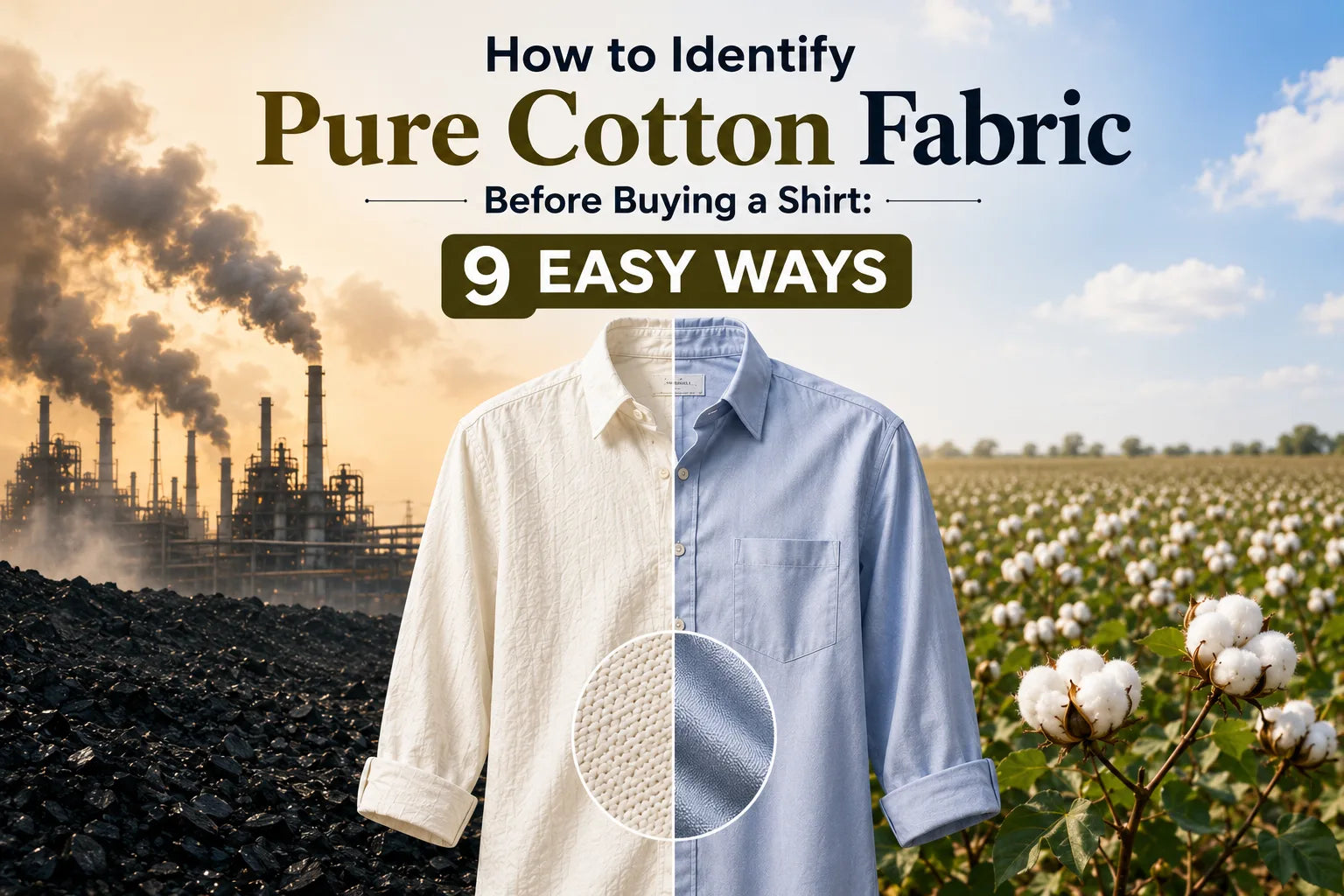
How to Identify Pure Cotton Fabric Before Buying a Shirt: 9 Easy Ways
How to identify cotton fabric? Buying the cotton shirt seems simple when you realize that not every shirt labeled as cotton is made with 100% pure cotton. Many brands blend cotton with polyester or other synthetic fabrics to reduce costs, but compromise on quality. The blended fabrics don't offer the same breathability, comfort, and durability as pure cotton.
Many buyers wonder why brands mix cotton with polyester. The main reason behind it is cost. Polyester is cheaper to produce, resists wrinkles and dries quickly. It allows the manufacturers to reduce production costs. These blends often sacrifice the natural softness, moisture absorption and airflow and make the pure cotton comfortable for daily wear.
If you want quality Pure Cotton Shirts, then you should know methods to identify cotton fabric. There are some simple methods and lab tests that help you identify the purity of this fabric. Let us read this blog and tell you the 9 easy ways to identify pure cotton fabric.


Why It’s Important to Identify Pure Cotton Online
Here is why it is important to identify the genuine cotton
- Better durability and comfort
- Skin-friendly wear
- Long-lasting durability
- True value for money
So, while buying online, you should identify the genuine cotton. Some products labeled like “cotton feel”, “cotton rich” or only mentioned “cotton shirt” lead buyers to believe that clothes are only made with 100% cotton. You can read the complete product description and fibre composition to avoid misleading claims and get comfort and quality you expect.
Pure Cotton vs Polyester: What's the Difference?
Many buyers compare the pure cotton and polyester before buying the shirt. Even both fabrics have their own uses, but they perform differently.
|
Pure Cotton |
Polyester |
|
Breathable and soft |
Less breathable |
|
Absorbs moisture naturally |
Repels moisture |
|
Gentle on sensitive skin |
May trap heat and sweat |
|
Matte, natural appearance |
Shiny and smooth |
|
Comfortable in hot weather |
Better wrinkle resistance |
The Formal Club focuses on premium cotton shirts for men, and provides superior comfort, breathability and naturally refined appearance.
Methods To Identify Pure Cotton Fabric
You should identify the pure cotton fabric to get quality and authenticity. Here we tell you the best method to learn how to identify cotton fabric and help you make informed decisions.
1. Touch Test (Feel the Fabric)
If you are asking how to identify cotton fabric by touch, then you can run your hand slowly across the fabric. Pure cotton feels soft, but not slick. It has a slight natural texture and warmth under your fingers. Blended fabrics or polyester feel smooth, cool, and slightly slippery, like inside a plastic bag.
If the fabric feels uniform and glassy, then it is your first warning sign. This test takes 3 seconds, and you can do it anywhere, in the store, even when a new garment arrives at your home, or at the market.
The Formal Club is committed to offering you Premium cotton shirts that retain a soft feel naturally. Our Formal shirts are made with 100% cotton without any heavy synthetic blends and pass through touch tests efficiently.
2. Wrinkle Test
Cotton fabric wrinkles easily, which is a good sign to identify 100% pure cotton. You can take a small portion of fabric, crush it gently in your hand for a few seconds, and then release it. If it wrinkles, then it is pure cotton. If it stays smooth, then it may be blended or synthetic. Synthetic fabrics resist wrinkling, while cotton creases naturally.
3. Look Closely at the Fabric Surface
Examine the fabric closely under good lighting. Pure cotton has a matte finish, slightly natural irregularities, a fine woven appearance, and a soft visual cotton fabric texture.
But the synthetic fabrics look very shiny, extremely smooth, artificial-looking, and uniform. So look at the fabrics closely to distinguish between the pure cotton and synthetic fabrics.
4. Burn Test (Advanced Check)
The burn test is a reliable scientific test, but it must be done safely at home on a small thread, not in a store. You can pull the single thread from fabric, hold it with metal tweezers away from flammable materials, and bring flame to it.
Pure cotton fabric burns steadily, like paper. It produces soft grey ash and smells like burning paper or dry leaves. Once you remove the flame, it stops burning quickly.
Synthetic fibers like polyester, nylon, and acrylic melt instead of burning. They drip, shrink away from the flame, smell chemical or plastic, and leave a hard, dark bead of residue, not ash. If your fabric leaves a hard bead after burning, it is a blend, no matter what the label claims.


5. Breathability Test
A breathability test is another method to identify 100% cotton fabric. Hold the layer of fabric up to your mouth and blow through it gently. Pure cotton is naturally porous; you'll feel your breath pass through without resistance. To identify it, you can hold fabric against your cheek. If it feels cool and allows airflow, then it is pure cotton.
Synthetic blends feel dense and noticeably restrict air movement. This is one reason it is a fabric choice for high-quality cotton shirts. Breathable cotton keeps body temperature lower by allowing sweat to evaporate naturally, rather than trapping it against the skin.
Natural airflow is the best thing about 100% cotton garments, especially in hot weather. The Formal Club only provides you with breathable cotton fabrics and provides long-lasting comfort throughout the day.
6. Water Absorption Test
Cotton is a favored fabric in humid environments because of its high absorption capacity. You can put a drop of water onto the fabric to test its absorbency. You can note how quickly the water is absorbed. Pure cotton quickly absorbs water and spreads it evenly.
Blended fabrics either absorb water more slowly or repel it. Cotton kurtas and other materials used in hot climates benefit greatly from this test.
7. Visual Inspection
Fabrics made with pure cotton have a distinct weave pattern. To examine, hold the cloth up to a light source. If the weave looks uniform and tight, then it is pure cotton. If we have imperfections and appear uneven, then it is blended fabric.
Additionally, pure cotton has a more natural and refined look because it lacks the false sheen of synthetic materials.
8. The Tear Test
A tear test is only for fabric samples or spare pieces, not for finished garments. To test, you should make a small cut at the edge of the fabric and tear it firmly with both hands. Pure cotton results in tears easily, producing the crisp ripping sound, and torn edges look straight with soft fibers. The blended fabrics result in being harder to tear, stretching before breaking, and leaving distorted and uneven edges.
9. Label & Tag Check
Label check is another method to identify 100% pure cotton. You should look at the label, "100% Cotton" or "Pure Cotton." Anything else like “ cotton feel”, “ cotton rich”, or “ cotton blend” shows that it consists of synthetic content.
For example, if the label says “60% cotton, 40% polyester,” then it shows blended fabrics. It may be a good garment, but not pure cotton fabric. So it is suggested to check the fiber composition in the product description, instead of only the headline. If the product is mentioned as "Cotton Kurti", then it does not mean it has 100% cotton content, so you have to check its description.
At The Formal Club, each product mentions its fabric composition clearly, and allows you to know exactly what you are buying. This transparent labeling helps you to make informed decisions without worrying about hidden synthetic blends.
Organic Cotton vs Regular Cotton
Buyers often compare the organic cotton with regular cotton. Both are genuine cotton fibres and provide excellent softness, breathability and comfort. Its key difference lies in how it grows. Let us look at differences below
|
Feature |
Organic Cotton |
Regular Cotton |
|
Growing Method |
Grown without chemical fertilizers or synthetic pesticides |
Grown with conventional farming methods, that may include synthetic chemicals |
|
Environmental Impact |
Lower environmental impact |
Higher environmental impact |
|
Comfort & Softness |
Soft, breathable, and comfortable |
Soft, breathable, and comfortable |
|
Durability |
Durable if cared properly |
Equally durable because made with high-quality fibres |
|
Skin Friendliness |
Suitable for sensitive skin |
Also skin-friendly if made from 100% cotton |
|
Price |
Expensive |
Affordable |
|
Best For |
Eco-conscious buyers |
Buyers looking for quality cotton at different price levels |
At The Formal Club, we focus on premium quality cotton shirts and deliver you comfort, breathability, and long-lasting performance, even in hot and humid weather.


Tips For Purchasing Pure Cotton Fabric
You should always identify the pure cotton fabric to get quality always. When looking for pure fabric, you should follow some given tips.
1. Check the Label
Look for "100% cotton" or "pure cotton" to ensure the fabric is made only from cotton fibers. Avoid blends or imitations if you specifically want pure cotton.
2. Inspect the Weave
Examine the high-quality cotton shirts closely for a consistent weave pattern typical of cotton. Look for visible horizontal and vertical threads to indicate a natural fiber composition.
3. Consider the Thread Count
A higher thread count usually means a finer, softer fabric. However, remember that thread count isn’t the only factor affecting quality; yarn quality and weaving technique also matter.
4. Check for Certification
Look for certifications like "GOTS" (Global Organic Textile Standard) for organic fibers and ensure environmentally and socially responsible production practices.
5. Consider Color Fastness
If buying colored cotton fabric, check its color fastness to ensure the color doesn’t bleed or fade significantly during washing.
6. Read Reviews
In case of buying a garment online, you should read reviews from other buyers and assess fabric quality, softness, and durability.
7. Purchase from Reputable Sellers
Buy from trustworthy sellers or brands known for quality cotton fabrics to ensure you're getting genuine pure cotton.
8. Ask Questions
Don’t hesitate to ask the seller or manufacturer about the fabric's origin, production process, and any certifications or tests conducted to verify its purity and quality.
The Formal Club Promise: Purity You Can Feel
After learning these methods, one question arises, where can you trust this purity without testing every time?
At The Formal Club, we believe you should never question fabric quality. Every piece we create starts with carefully sourced pure cotton chosen for comfort, durability, and integrity. Our designs focus on breathability, skin comfort, and natural cotton fabric texture, the qualities described in the tests above.
- When you touch our formal shirts, you’ll know the softness from the Touch Test.
- When you observe its weave, you’ll see the matte finish and natural character of authentic cotton.
- We do the careful work so you can choose with confidence.
Unlike the other brands that rely on higher polyester content to reduce manufacturing costs, we use the premium cotton and deliver you better airflow, natural comfort and long lasting quality. We also provide you transparent fabric information and allow you to buy it with confidence.
Conclusion
Learning how to identify cotton fabric has become easier with the above simple methods and lab tests. With the touching, wrinkling, and absorption tests, you can easily tell the difference between cotton and synthetic fibers. It helps you make informed decisions, ensure that your clothes look good, feel comfortable, and support your skin health.
Also Read: Best Zero Polyester Clothing Brand in India: Why It Matters
FAQs
Q1. How to Identify Cotton Fabric by Touch?
Ans: You can identify the pure cotton fabric by touch. If you feel soft, natural on your skin with a slightly matte finish, then it is pure cotton.
Q2. What is the Typical Cotton Fabric Texture?
Ans: A genuine cotton fabric texture is smooth, soft, slightly warm, naturally matte, and breathable. It may wrinkle easily and highlight pure cotton fibers.
Q3. How to Confirm if Cotton Fabric is 100% Pure?
Ans: To confirm the 100% pure cotton, you can check its purity through staple length testing, moisture regain analysis, GSM consistency, dye fastness tests, and controlled burn test. Always check the lab reports and valid certifications from the supplier to confirm pure cotton.
Q4. Why is the Burn Test Used to Identify Cotton?
Ans: The burn test is used to identify cotton fibers from synthetics. Pure cotton can burn steadily, smell like paper, and leave grey ash behind. On the other hand, synthetic fabrics melt, emit chemical odors, and leave hard black residue.
Q5. Can Pure Cotton Absorb Dye Better Than Blends?
Ans: Yes, pure cotton can absorb dye better than blends and delivers consistent and vibrant colors. Blends result in uneven dyeing or faster fading. ISO standard fastness tests can also verify its uniformity and retention.