All Shirts
 New Arrivals
 Luxe Collection
 Accessories
 Giza Cotton
 Linen
Linen
 Oxford
 Corduroy
 Wrinkle Free
 2 Ply Cotton
 Fabrics We Use
 Full Sleeve
 Half Sleeve
 French Cuff
 Plus Size
 Shop By Pants
 Work Essentials
 Client Meetings
 Presentations
 Smart Casual Fridays
 Travel & Long Days
 Weddings & Special Occasions
 Interviews
 Build Your Giza Pack
 Build Your Linen Pack
 Size & Fit Guidance
 Contact Us
 About Us
 Our Offline Store
 Men Of TFC
 Buy Back TFC
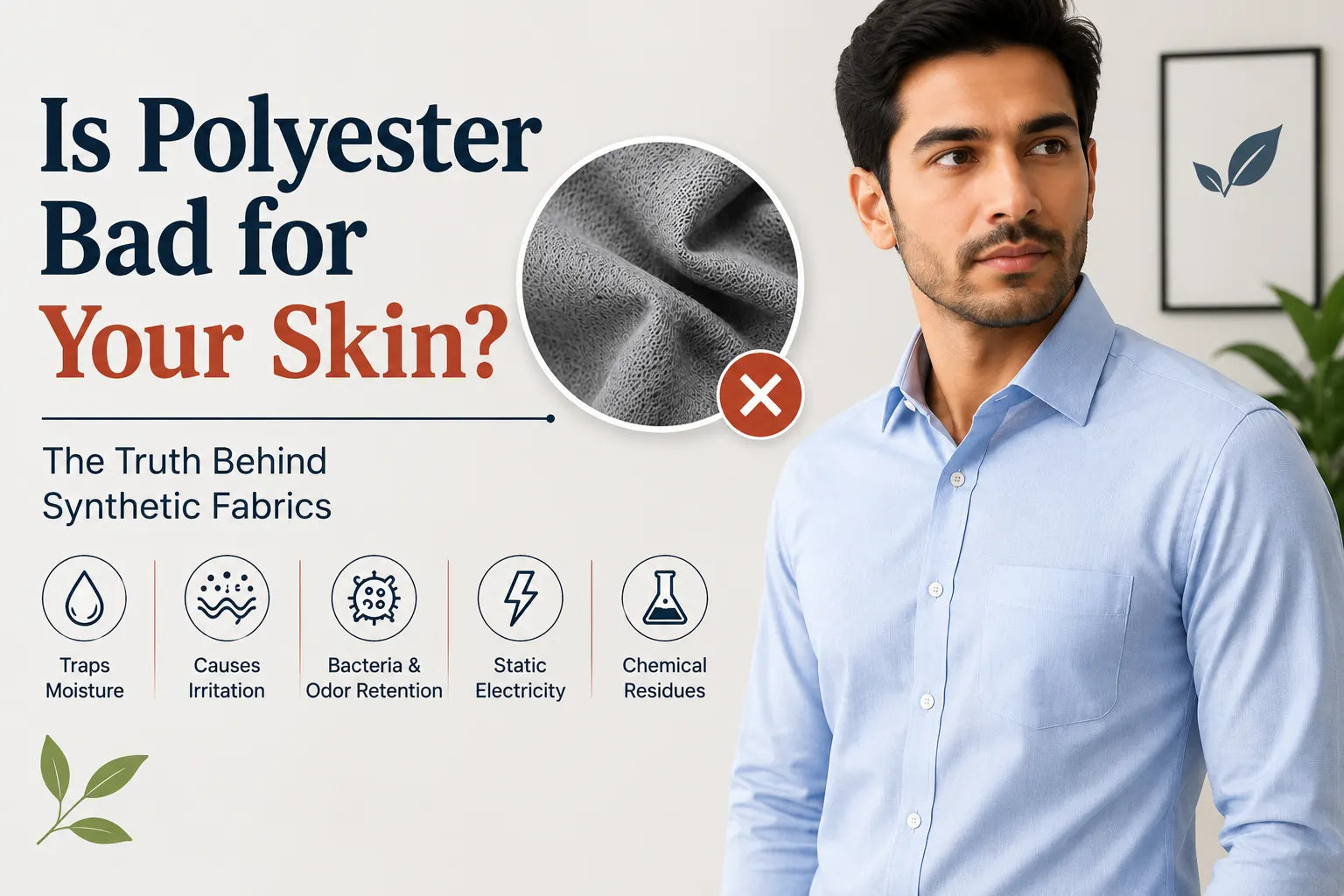
Is Polyester Bad for Your Skin? The Truth Behind Synthetic Fabrics
Key Takeaways
- Polyester is not inherently harmful to the skin, but its low breathability can trap heat and moisture, causing discomfort for some people.
- People with sensitive skin, eczema, or allergies may experience itching, redness, or irritation when wearing polyester fabrics.
- Polyester tends to retain sweat and odor, which can encourage bacterial growth and increase skin discomfort during prolonged wear.
- Chemical treatments, dyes, and finishing agents used in polyester manufacturing may trigger skin reactions in sensitive individuals.
- Cotton-polyester blends often provide a better balance of comfort, breathability, durability, and wrinkle resistance than 100% polyester.
- Natural fabrics such as cotton, linen, bamboo, and merino wool are generally more breathable and skin-friendly alternatives.
- High-performance polyester activewear can be beneficial during exercise because it helps wick moisture away from the body.
- Choosing quality polyester garments, avoiding tight fits, and washing new clothing before use can help reduce the risk of skin irritation.
- The best fabric choice depends on your skin type, climate, and daily activities, making comfort and breathability key factors to consider.
Introduction
Polyester is a widely used fabric in the world, and its popularity is due to the wrinkle resistance, durability, and affordability. With the awareness increase on skin health and risks associated with the synthetic fabrics, many people wonder if polyester is good for the skin? In this blog, we look at the hidden truth behind the Polyester fabric and its impact on skin health.
What is Polyester?
Polyester is a synthetic fabric made from petrochemicals derived from oil. It is crafted through the chemical reaction between terephthalic acid and ethylene glycol and produces a strong and durable fabric.


The Hidden Truth Behind Polyester
To understand "is polyester good for skin," you must look at its benefits and drawbacks. Polyester is used everywhere in clothing, activewear, and even bedding. It is affordable, durable, and wrinkle-resistant fabrics. But there are some hidden facts behind it. You must know these facts to know whether it is good for your skin or not.
1. Lack of Breathability
Polyester is made with less breathable materials and does not breathe well. It traps moisture and heat against the skin and leads to excessive sweating. It may cause discomfort and irritation, especially for those with sensitive skin or conditions such as eczema.
2. Potential for Skin Irritation
It causes allergic reactions or irritation to sensitive people. These reactions stem from the chemicals used during production, including dyes and finishing agents. Symptoms include itching, redness, and rashes. So the prolonged exposure to these chemicals causes increased sensitivity over time.
3. Bacteria and Odor Retention
Because polyester retains moisture, it becomes a breeding ground for bacteria. It leads to body odor and worsens conditions like acne when worn for long periods. If you do not clean it regularly, then it takes on a musty smell because of the bacterial growth.
4. Static Electricity
This fabric is well known for generating static electricity and causing fabric to cling to the skin. It becomes uncomfortable and worsens dryness or irritation, especially in dry climates. Static buildup can also attract dust and allergens, further contributing to skin irritation.


5. Chemical Residues in Polyester
Most of these fabrics undergo chemical treatments to improve properties such as stain resistance, water resistance, or flame retardancy. These treatments leave behind residues that contact the skin, causing irritation or allergic reactions in sensitive individuals.
Polyester vs. Natural Fabric Blends
Every piece of polyester doesn't hurt your skin, so you don’t need to throw it away. You must understand how it compares to natural alternatives to choose the right fabric. Let us compare it below.
|
Fabric Choice |
Skin Impact |
Best Used For |
|
100% Polyester |
Risk of trapping sweat, causing rashes, and locking in body odor. |
Rain gear, short-duration activewear, and heavy outerwear |
|
Cotton-Polyester Blends |
A blend like 20% polyester and 80% cotton retains natural breathability and makes it wrinkle-resistant. |
Everyday T-shirts, casual wear, and loungewear. |
|
100% Organic Cotton |
Highly breathable, hypoallergenic, and gentle on sensitive skin. |
Undergarments, daily staples, and pajamas |
|
Pure Linen |
Naturally antibacterial, maximum airflow and pulls moisture away rapidly from the skin. |
Hot weather clothing and bedding for hot sleepers. |
When is Polyester Actually a Good Choice?
Even 100% polyester is not the best option for daily casual wear, but it is suitable for activewear. High-performance polyester athletic wear wicks sweat away from your body, so it evaporates quickly. It keeps you cooler during intense exercise.
Better Skin-Friendly Alternatives
If you are seeking alternative options to polyester, then here are the best fabrics for you
- Cotton: It is a natural, soft, and breathable fabric, gentle on your skin.
- Linen: A breathable, lightweight, and cooling natural fiber.
- Bamboo: It is a soft, sustainable, breathable, and moisture-wicking fabric.
- Merino wool: It is the natural fiber that breathes well, wicks moisture, and regulates temperature.


Tips for Choosing Skin-Friendly Polyester Clothing
Here are the tips you can follow to wear polyester without harming your skin health
1. Choose High-Quality Fabric
Buy the polyester clothing made with quality fibers that feel soft and smooth on your skin. Don't buy cheap clothes with rough polyester, otherwise, it irritates your skin.
2. Check the Label
Read the label to understand special care instructions, such as hand washing and dry cleaning, and retain the quality of polyester fabric. Don't wear polyester clothes that are difficult to care for, or they may lose texture and shape with time.
3. Avoid Tight-Fitting Garments
Don't buy the too-tight or too-loose polyester because it irritates your skin and causes chafing. You should use the items that fit well and allow better air flow.
4. Wash the Garment Before Wearing
Wash new polyester clothing before you wear it, as it may contain chemicals that irritate the skin. Use a mild detergent and skip the fabric softeners, which can clog the fibers and reduce breathability.
Looking for Skin-Friendly Formal Wear? Contact The Formal Club
Check the collection of polyester-free shirts at The Formal Club and maintain your comfort. Our collection features the fabrics made for softness, breathability, and all-day comfort, and maintains your polished professional look. Whether you prefer pure cotton or quality fabric blends, you'll find the best formal shirts designed for both style and comfort.
Conclusion
Polyester is a complex fabric that affects your skin health. Even though it has benefits like affordability and durability, it also irritates your skin and causes allergies. So if you are concerned about Polyester risks, then you can choose the alternatives like linen, cotton, bamboo, etc. By choosing the right fabric for your skin type and needs, you can get comfortable and sustainable clothing that protects your skin.
Also Read: What is 2-Ply Cotton? Why It's the Best Fabric for Important Meetings
FAQs
Q1. Is Polyester Breathable?
Ans: No, it is not a breathable fabric because it traps moisture and heat. It makes it uncomfortable to wear, especially in warm weather or during physical activity. Some polyester fabrics with built-in moisture-wicking properties are more breathable than others.
Q2. Is Polyester Good for Skin in Everyday Clothing?
Ans: Yes, it is a safe fabric for some people in daily wear. But the clear answer of whether it is good for skin or not depends on factors like the activity level, climate, and skin sensitivity. People with sensitive skin prefer breathable fabrics like linen or cotton and get greater comfort.
Q3. Can Polyester Cause Skin Allergies?
Ans: Yes, it may cause skin allergies. The allergy is caused by the dyes used in the manufacturing process. The mild to severe symptoms of allergy caused by this fabric are itching, redness, and blistering.
Q4. Can Polyester Cause Itching?
Ans: Yes, it may cause itching because of the condition called textile contact dermatitis. Even a true allergy to the synthetic polyester fiber is rare, the fabric frequently causes skin irritation.
Q5. Is Cotton Better Than Polyester for Sensitive Skin?
Ans: Yes, cotton is a better fabric than polyester for sensitive skin. It is more absorbent, breathable, and gentle on your skin. It allows better airflow and reduces heat and moisture buildup than polyester.