All Shirts
 New Arrivals
 Luxe Collection
 Accessories
 Giza Cotton
 Linen
Linen
 Oxford
 Corduroy
 Wrinkle Free
 2 Ply Cotton
 Fabrics We Use
 Full Sleeve
 Half Sleeve
 French Cuff
 Plus Size
 Shop By Pants
 Work Essentials
 Client Meetings
 Presentations
 Smart Casual Fridays
 Travel & Long Days
 Weddings & Special Occasions
 Interviews
 Build Your Giza Pack
 Build Your Linen Pack
 Size & Fit Guidance
 Contact Us
 About Us
 Our Offline Store
 Men Of TFC
 Buy Back TFC

Best Shirts for Hot Weather Formal Guide to Stay Cool & Professional in Summer
The best shirts for hot weather are linen shirts for maximum cooling, cotton shirts for formal structure, and blended fabrics for a balance of comfort and professionalism.
A study by the Lawrence Berkeley National Laboratory on heat and workplace performance indicates measurable productivity decline in warmer conditions, especially in environments with limited airflow.
- Cotton → best for structure and formal settings
- Linen → best for cooling and breathability
- Blends → best for balanced comfort and performance
Formal vs Comfort Trade-Off
Formal shirts are designed for structure and authority, but summer demands breathability and thermoregulation.
- Structured cotton → looks sharp but traps moisture
- Linen → cool but wrinkles easily
- Synthetic blends → manage sweat but may feel less premium
This tension is the reason most men struggle with summer formal wear.
The S.U.M.M.E.R Framework (Decision System)
Use this framework to choose the right shirt for hot weather:
- S — Sweat Level: High sweating → linen or blends; low sweating → cotton works well
- U — Use Case: Interviews → cotton; daily office → blends; commute → performance fabrics
- M — Material: Cotton → structure; linen → airflow; blends → balance
- M — Microclimate Fit: Slightly relaxed fit creates airflow (cooling); tight fit traps heat
- E — Environment: Humid → moisture-wicking; dry heat → breathable natural fibers
- R — Result: Choose based on environment + sweat level + use case
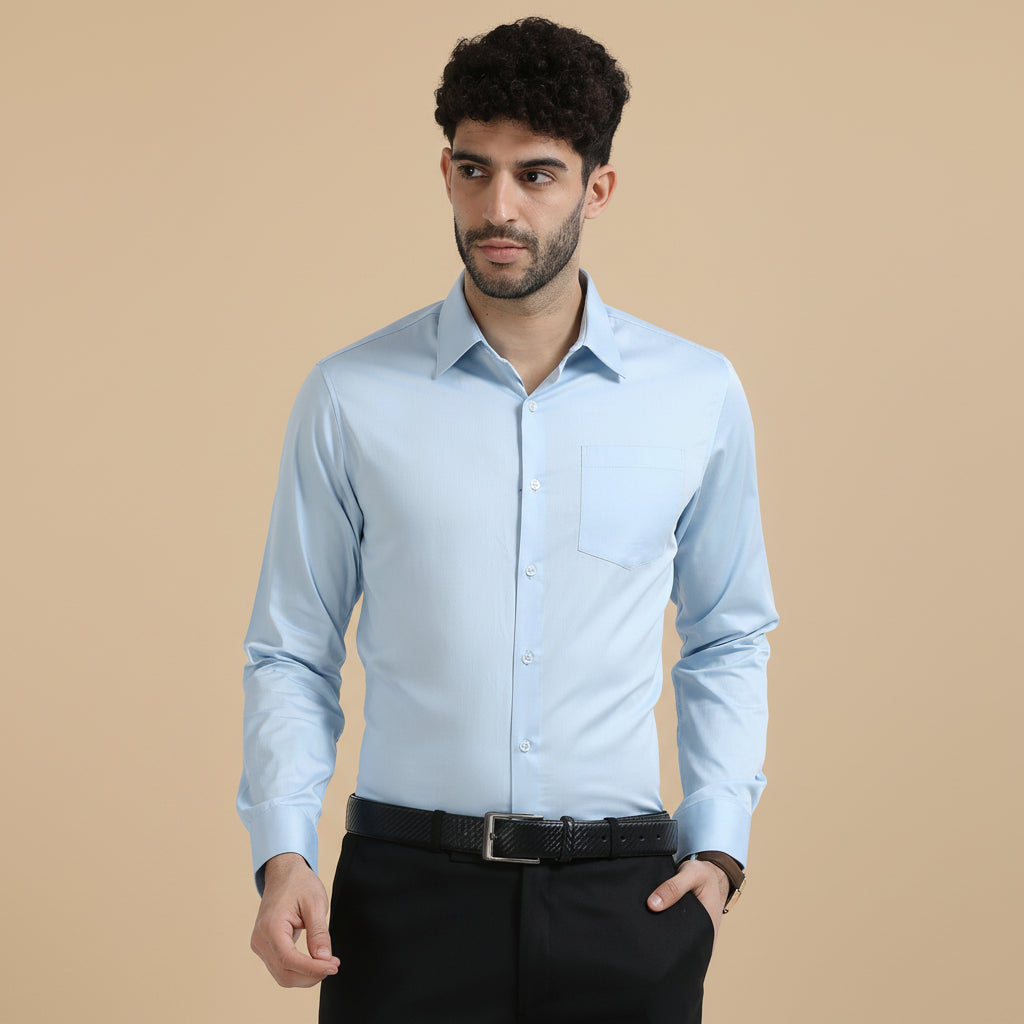


Summer Fabric Performance Matrix
| Fabric Type | Breathability | Wrinkle Resistance | Formality Level | Best For |
| Cotton | High | Medium | High | Interviews, office |
| Linen | Very High | Low | Medium | Summer, travel |
| Tencel/ Bamboo |
High | Medium | Medium | Long hours, comfort |
| Blends | Medium-High | Medium | Medium-High | Daily wear, commuting |
What This Comparison Means
Cotton prioritizes structure and professionalism, while linen prioritizes airflow and cooling. Advanced fabrics and blends attempt to balance both.
Cotton: Structured but Heat-Sensitive
At The Formal Club, cotton shirts are engineered using long-staple fibers to maintain structure while improving airflow.
Insight
Long-staple cotton fibers are longer and more uniform, resulting in:
- smoother surface → less friction on skin
- tighter weave → better shape retention
- improved airflow compared to regular cotton
In internal wear testing at The Formal Club, structured cotton shirts maintained visual crispness for over 6–8 hours of continuous wear in office conditions.
Best for:
- Interviews
- Air-conditioned offices
- Formal environments
Linen: Maximum Cooling Performance
Linen is derived from flax fibers, which are naturally rigid and breathable.
Insight
In internal testing at The Formal Club, linen fabrics demonstrated significantly faster moisture evaporation compared to cotton, helping reduce surface stickiness during prolonged wear.
Additionally, The Formal Club’s linen shirts use a slightly open weave structure that creates micro air gaps between the fabric and skin.
For optimal cooling, a gap of approximately 2–4 mm between skin and fabric allows convection airflow, which helps dissipate heat efficiently.
This is why slightly relaxed fits feel cooler than tight shirts.
Best for:
- Hot weather
- Outdoor movement
- High humidity environments
Tencel / Bamboo: Performance Comfort Layer
These fabrics are engineered for moisture control and smoothness.
- Higher moisture absorption than cotton
- Faster drying time
- Reduced skin irritation
They are suitable for extended wear and high-movement environments.
Performance Blends: Balanced Solution
Blended fabrics combine structure with moisture management.
- Improved sweat dispersion
- Faster drying than cotton
- Better wrinkle resistance than linen
These are ideal for commuting and daily wear in humid cities.
Why The Formal Club Solves the Problem
The Formal Club designs shirts specifically to solve the microclimate problem in formal wear.
Instead of choosing between structure and comfort, their approach focuses on:
- fabric selection (long-staple cotton, breathable linen)
- weave engineering (airflow optimization)
- fit design (allowing airflow without losing structure)
This ensures the shirt works with the body’s cooling system rather than against it.
Recommended Shirts for Hot Weather
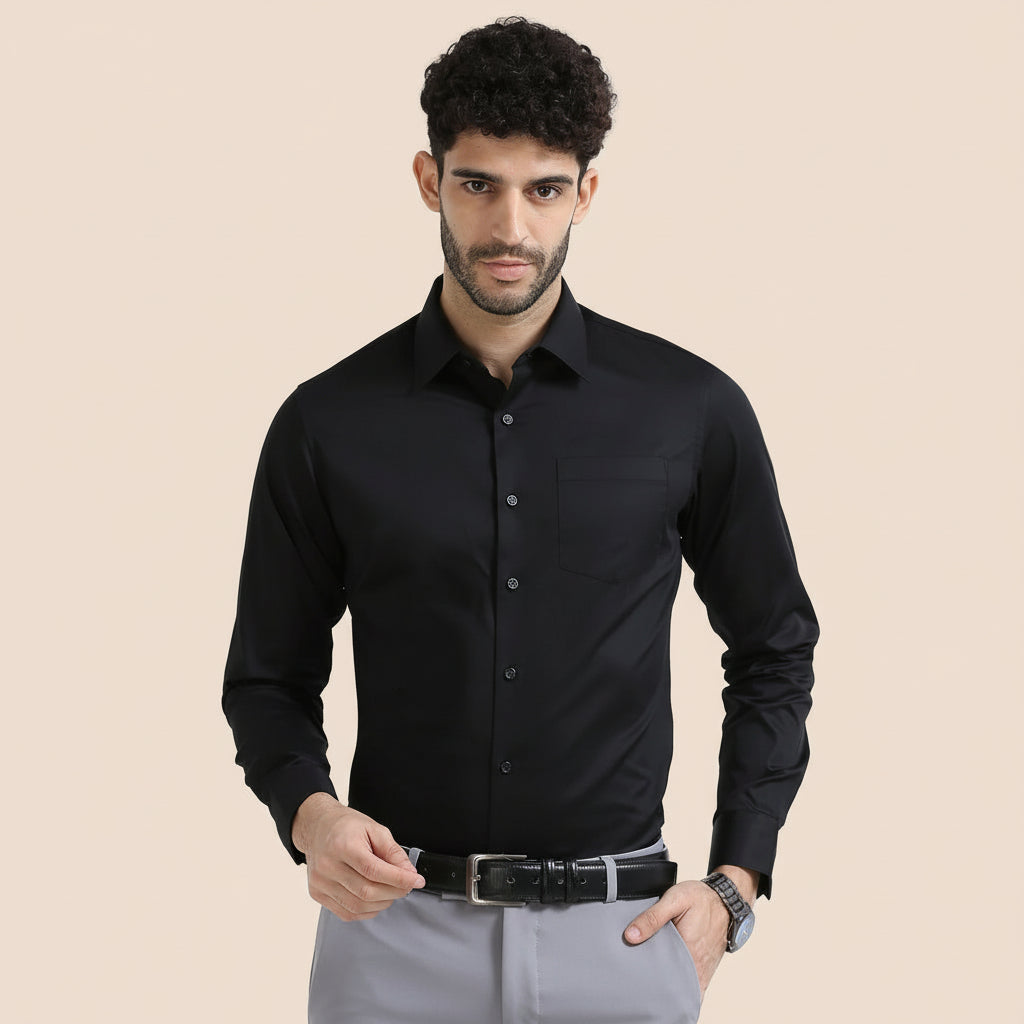
- Giza Cotton Shirt — best for sharp formal structure
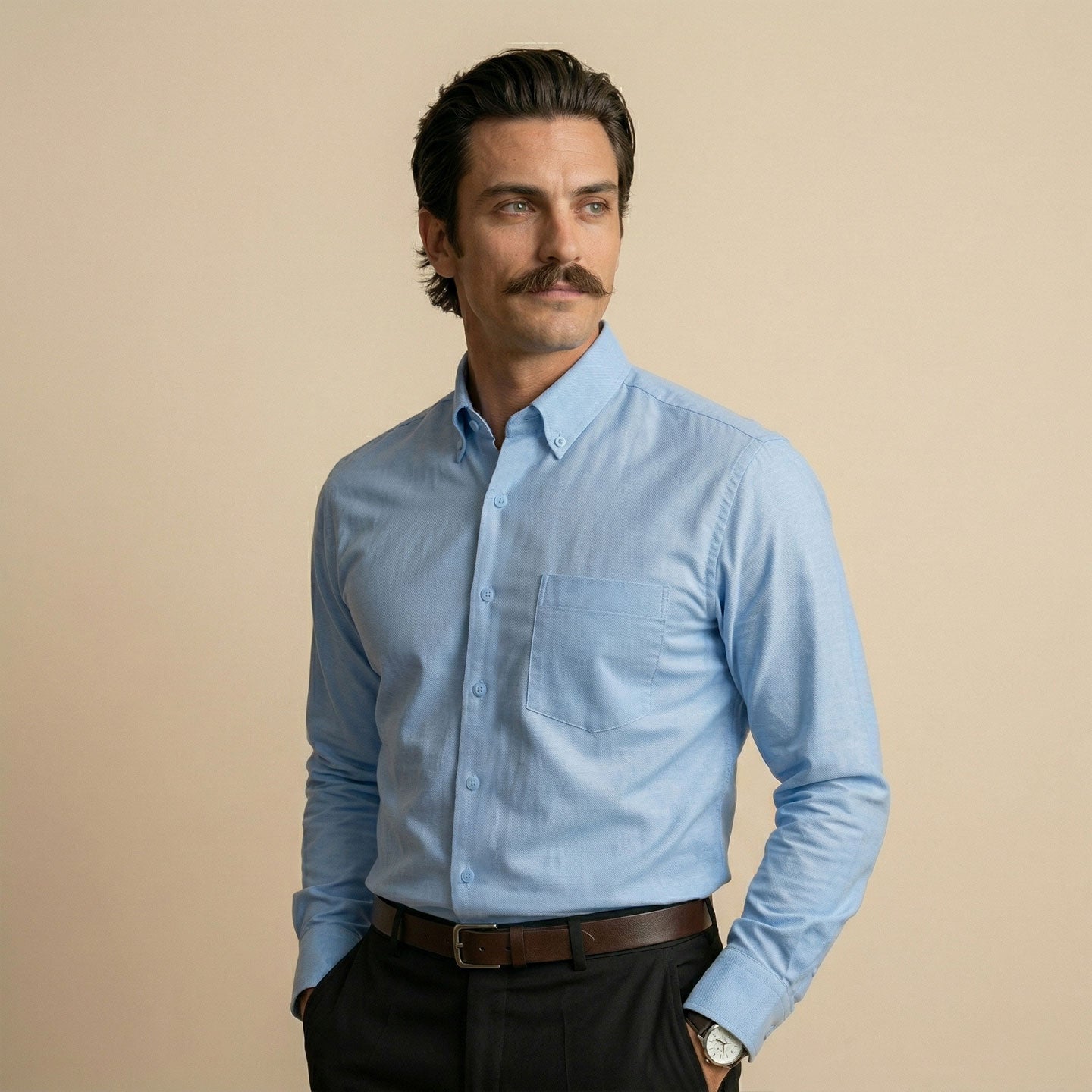
- Oxford Cotton Shirt — ideal for daily office durability
- Pure Linen Shirt — maximum airflow for hot weather
- Linen Blend Shirt — balance between structure and comfort

13 reviews


45 reviews
Use Cases
Office + AC
Choose cotton for structure and professional appearance.
Hot Commute
Choose linen or blends for airflow and sweat management.
Interviews
Choose premium cotton for authority and crispness.
Hybrid Work
Choose blends or performance fabrics for balance.
Conclusion
The best summer shirt is not just about fabric it is about how that fabric interacts with your body, environment, and movement.
When you optimize for microclimate, you don’t just stay cool, you perform better.
FAQs
Q1. Can I wear a linen shirt to a strict corporate interview?
Ans: Pure linen is generally too relaxed and wrinkle-prone for strict corporate interviews. A structured cotton shirt or a cotton-based blend is a better choice.
Q2. Which shirt is best for hot weather?
Ans: Linen shirts are best for hot weather due to airflow and moisture evaporation, while cotton is better for controlled environments.
Q3. What fabric keeps you coolest in summer?
Ans: Linen is the coolest fabric due to its airflow and thermoregulation properties.
Q4. Why do some shirts feel hotter than others?
Ans: Because of poor microclimate management, when airflow is restricted, heat and sweat get trapped between the skin and fabric.